The $500 Penalty Hiding in Your Storage Closet
Paper records put your Florida COA at legal and financial risk. Learn how digital document management protects your association from penalties, lawsuits, and disasters.
The Cardboard Box Problem
Somewhere in your association there are cardboard boxes. Maybe they’re in a board member’s garage. Maybe they’re in a storage closet behind the pool equipment. Maybe they’re spread across three different units because the last three presidents each kept their own copy of “important stuff.”
Those boxes contain your association’s official records. Meeting minutes from 2004. Financial statements from 2017. A contractor agreement nobody remembers signing. Insurance certificates that may or may not be current.
Florida law doesn’t care where you keep your records. It cares that you can produce them. Fast.
Ten Days, No Exceptions
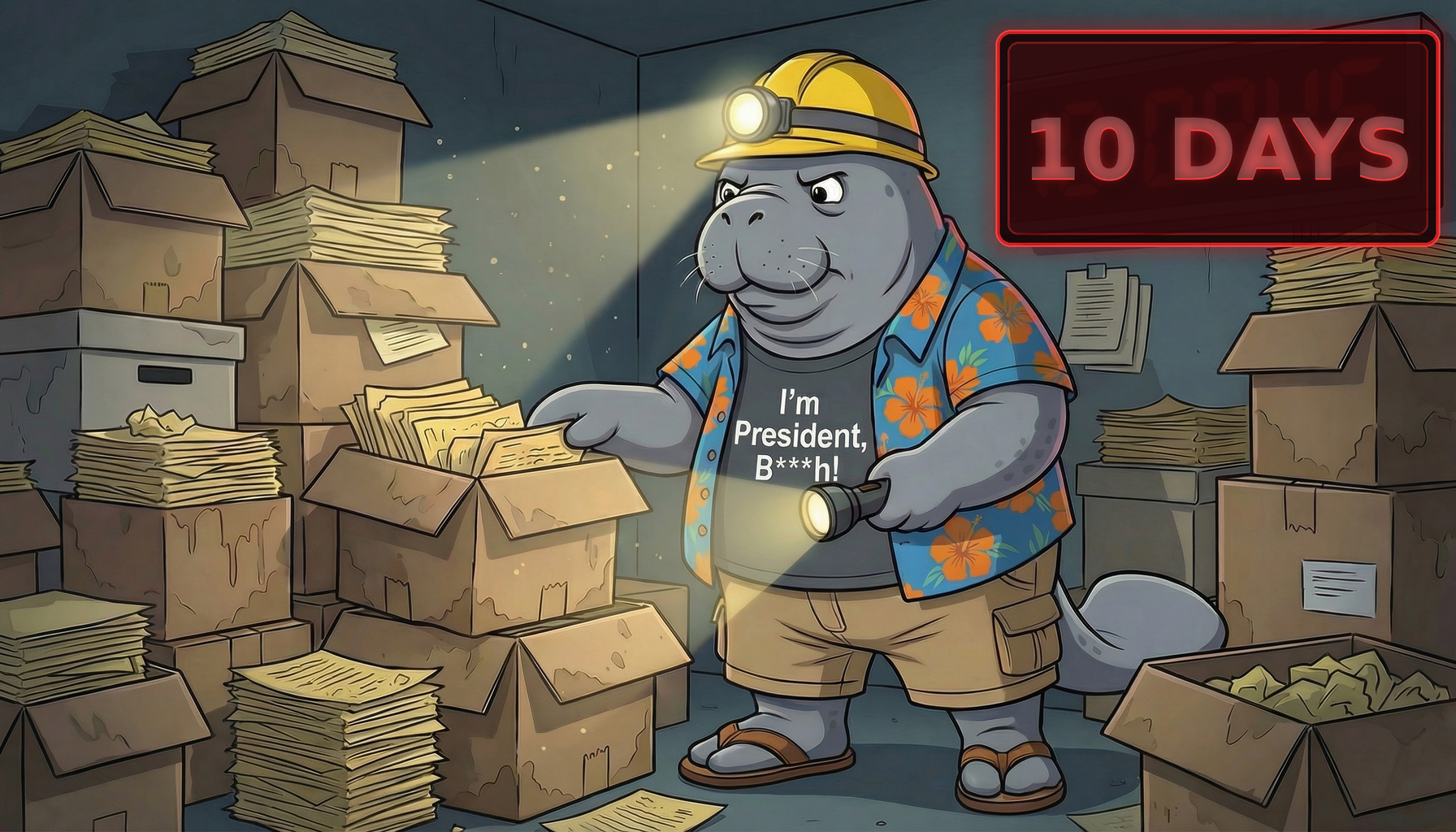
Under FS 718.111(12), unit owners have the right to inspect and copy official association records. When they submit a written request, your association has 10 business days to make those records available. Not 10 days to start looking. Ten days to deliver.
Miss the deadline, and you owe $50 per day for up to 10 days—$500 in statutory minimum damages per request (FS 718.111(12)(c)). One frustrated owner can file. So can five. So can twenty.
Now imagine someone requests the minutes from a board meeting in 2019 where the association voted on a special assessment. Your records are in three different boxes in two different locations. One box got wet during a tropical storm. The meeting minutes from 2018 to 2020 are mixed in with vendor invoices and old newsletters.
Ten days.
What Paper Records Actually Cost You
The direct costs are obvious: storage space, filing supplies, the time it takes someone to manually search through boxes. But the real cost is what happens when paper fails.
Water damage. Florida is a state of hurricanes, tropical storms, flooding, and humidity. A single water event can destroy decades of irreplaceable records. Insurance may cover the cost of the storage unit. It won’t recreate the minutes from the 2011 meeting where the board discussed the roof warranty.
Fire. One electrical fault in a storage closet and your entire institutional memory is ash.
Loss during board turnover. Every time a president or treasurer leaves the board, records move. Sometimes they move to the next board member’s home. Sometimes they move to the trash. The new board inherits gaps they don’t even know about until someone asks for something that no longer exists.
Deterioration. Paper degrades. Ink fades. Rubber bands rot and stick to the documents they were supposed to protect. After 20 or 30 years in a non-climate-controlled space, many records become unreadable.
Destruction is a crime. Under Florida law, knowingly destroying official records of a condominium association is punishable as tampering with physical evidence (FS 918.13) or obstruction of justice under Chapter 843. That includes accidental destruction through negligence when you had a duty to preserve.
What Digital Actually Protects
Digital document management isn’t about being modern. It’s about reducing specific, quantifiable risks that paper creates.
Instant Retrieval
When an owner requests records, you search by keyword, date, category, or document type. You produce results in minutes. The 10-day clock becomes irrelevant because you never need more than 10 minutes.
Redundancy
Digital records live on servers with automatic backups. Your documents exist in multiple locations simultaneously. A hurricane can destroy your building without destroying a single record.
Audit Trail
Digital systems track who uploaded what, when it was accessed, and by whom. If a dispute arises about whether a document was available, you have the log. Paper filing cabinets don’t keep logs.
Access Control
Not all records are public. Personnel records, social security numbers, bank account information, and attorney-client communications are restricted under FS 718.111(12)(c). Digital systems let you grant access by category. Paper systems require you to physically remove restricted documents before handing over a box.
Version Control
When your bylaws are amended, you need both the original and every subsequent amendment. Digital systems maintain version history automatically. Paper systems rely on someone filing the amendment in the right folder and not throwing away the original.
The Transition Problem
Most older Florida COAs aren’t starting from zero. They’re starting from 20, 30, or 40 years of accumulated paper in various states of organization and decay.
The mistake most boards make is trying to scan everything at once. That project is overwhelming, expensive, and usually abandoned after someone scans two boxes and gives up.
Start With What Matters Most
Week one: Scan your governing documents. Declaration of Condominium, Articles of Incorporation, Bylaws, and all amendments. These are permanent records. They’re the most frequently requested. And they’re usually the easiest to locate because every board member has a copy somewhere.
Month one: Scan the last two years of meeting minutes and financial statements. These cover your current retention obligations and are the most likely to be requested.
Quarter one: Work backward through financial records (seven years required) and meeting records (five years required). Prioritize by age—the oldest records are most at risk of deterioration.
Ongoing: Every new document goes digital from day one. Meeting minutes get uploaded the week they’re approved. Financial statements go in monthly. Contracts go in when they’re signed. The paper backlog shrinks while the digital archive grows.
Don’t Throw Away the Paper Yet
Digitizing doesn’t mean destroying originals immediately. Keep the originals in a secure location until you’ve verified the digital copies are complete and readable. For governing documents, keep the originals permanently in a safe deposit box.
Once you’ve confirmed digital copies, you can begin destroying expired records following proper procedures: cross-cut shredding for confidential documents, with a log of what was destroyed, when, and who authorized it.
What Florida Law Requires You to Keep
The retention requirements haven’t changed just because you go digital:
- Permanent: Governing documents, original construction documents, as-built plans, surveys, easement agreements, warranty information for major systems, annual financial statements, audited financials, tax returns, records of major capital improvements
- Seven years: Annual budgets, monthly financial statements, bank statements, accounts receivable/payable, invoices, receipts, contracts, leases, insurance policies, special assessments, payment histories, collection correspondence
- Five years: Board meeting minutes, member meeting minutes, committee minutes, written consents, resolutions, election ballots, proxies, significant correspondence, legal correspondence, compliance notices
- Four years: Service contracts and vendor agreements after completion
- One year: Ballots, sign-in sheets, voting proxies, and all papers and electronic records relating to voting (FS 718.111(12)(a)12)
- Until resolution + seven years: Pending litigation, open claims, active violations, disputes
Digital or paper, these minimums are the same. The difference is that digital makes compliance trivial instead of heroic.
The Owner Portal Advantage
Modern document management goes beyond storage. When owners can access public records through a secure portal—24 hours a day, without calling the board president—formal record requests drop dramatically.
An owner who can look up the last three years of meeting minutes on their phone at 9 PM on a Tuesday doesn’t need to submit a formal written request. That means fewer deadlines to track, fewer penalty risks, and fewer adversarial interactions between owners and the board.
Transparency reduces conflict. When records are easy to access, owners trust the board more. When records are hidden in boxes, owners assume the worst.
Common Objections
“We can’t afford a digital system.” You can’t afford a $500 penalty per owner request you miss. You can’t afford to recreate records destroyed in a flood. You can’t afford the legal exposure of missing documentation during an audit or lawsuit. The question isn’t whether you can afford digital management. It’s whether you can afford to keep betting on cardboard.
“Our board members aren’t tech-savvy.” If they can use email, they can upload a document. Modern platforms are designed for boards, not IT departments. If someone can attach a file to an email, they can manage documents digitally.
“We’ve always done it this way.” Florida COA law has changed significantly in the last five years. HB 1021 expanded compliance requirements. Reserve fund rules tightened. Record request penalties got teeth. What worked in 2015 doesn’t protect you in 2026.
Ready to get your records out of the boxes? Vista Blue Connect gives Florida associations a secure, searchable home for every document—past and future. Schedule a demo or meet with us by appointment only at the Walgreens Building (100-110 Century Blvd, Suite 202).
Ready to Simplify Your Association Management?
Vista Blue Connect provides the tools you need to manage documents, communicate with owners, and stay compliant with Florida law.